
A property guide for buyers and sellers, from someone who lives here. Not a tourist guide: the districts, the commute, flood risk and the “holiday zone” rules you should understand before you buy or sell in Szentendre.
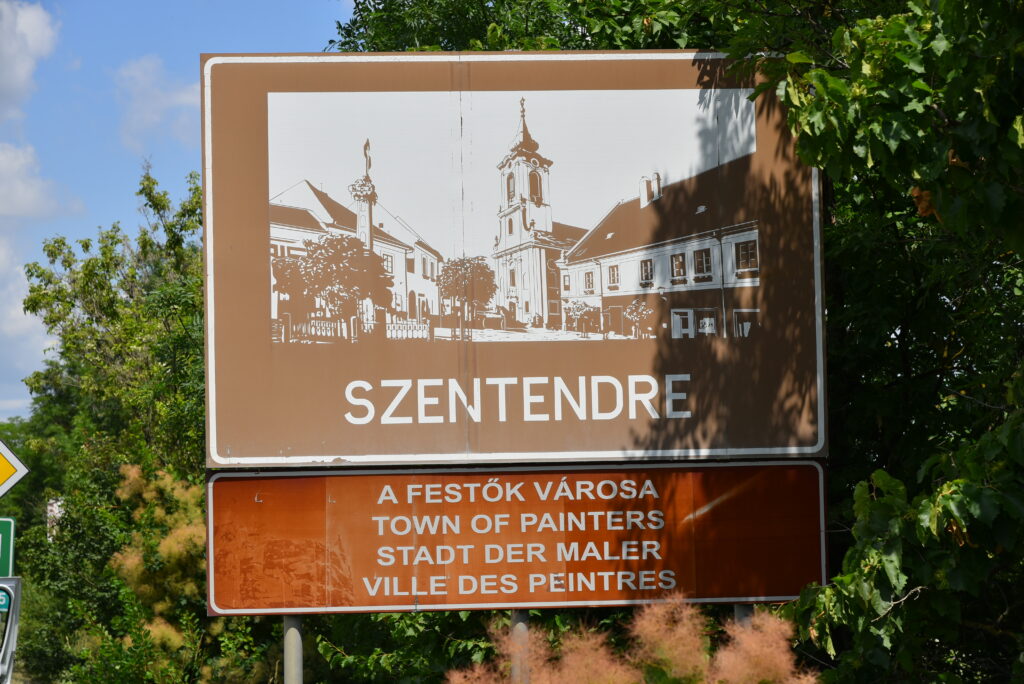
We moved to Szentendre in 2023 from Máriaremete, on the Buda side of the capital. We had been coming here for years for hikes and family visits; then we found a house in Pismány, on the hillside, that exceeded everything we had imagined, and we took the leap. The big house and the view, however, did not suit our daily logistics, so we moved down to the old town, close to everything.
So my local knowledge is not only professional: I have experienced this market as a buyer and as a seller. I also had assignments here long before we moved, going back to my years in a franchise network. A flat in Püspökmajor, a family house in Pismány, a plot on Szarvashegy: these are just the most recent ones.
Szentendre grew out of several former villages and farmland: Izbég used to be an independent village, while Pannónia-telep, Püspökmajor, Pismány and Szarvashegy were built on the town’s former fields and vineyards. Most of the outer areas only became part of the built-up town in 1979, when construction for housing and holiday homes took off.
You can still see this today: one half of the town is “proper” residential land, the other half is holiday-zoned hillside that has since been built up completely. In some areas the utilities are overloaded, and power and water cuts are a recurring problem. I will come back to this.
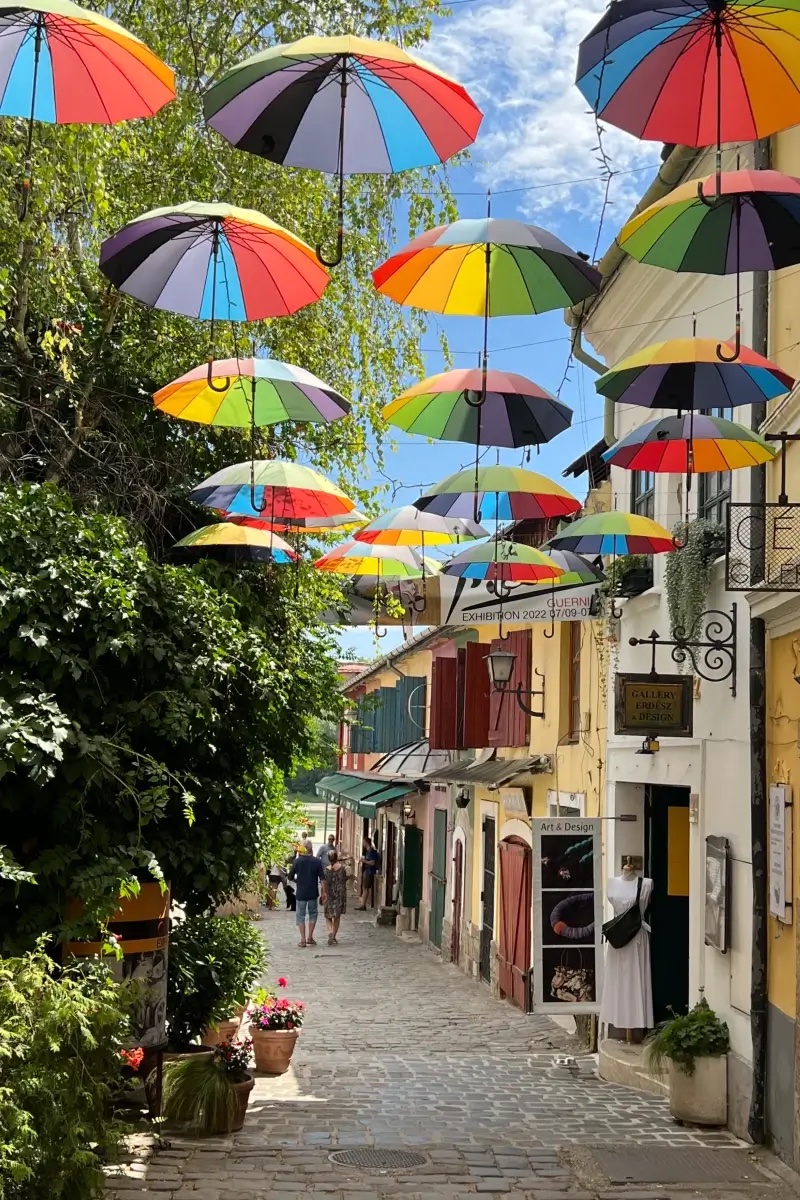
The listed old town with Fő tér, the Serbian churches and the Danube promenade is the Szentendre of the tourists, but people live here too: renovated burgher houses, small courtyards, steps. Parking is paid and zoned, with many no-entry and permit-only streets; watch the signs, the town earns good money from them.
I have no personal experience in this part of town: I have had no assignment here, nor have I worked with a buyer who was looking here. That does not mean it is any less popular. What I see from the outside: the listed-building environment makes buyers cautious, and the parking and the occasional tourist crowds are a nuisance. On the other hand, the riverside is right there and the old town is full of authentic restaurants: if you like going out for dinner, you will certainly save the taxi fare.
The town’s two estates of prefabricated (“panel”) blocks. The Püspökmajor estate is bounded by László-telep, Kovács László utca, Dunakanyar körút and Vasúti villasor; the Püspökmajor nursery is here and the swimming pool is nearby. For first-time buyers and smaller budgets this is the entry point to Szentendre, within walking distance of the HÉV.
Both estates are very popular. In Püspökmajor parking is difficult because of the number of cars per household and the nursery. There are also new-build apartment buildings with their own parking spaces; these are in high demand and sell at Budapest prices per square metre. All age groups live here, many pensioners and many families with small children. There is a playground on every corner and the whole area is green: we like to wander here after nursery, because we are sure to bump into someone we know.
A flat, sewered garden suburb between Vasúti villasor, Pannónia utca, Telep utca and the Dera stream. Detached and semi-detached houses; the central nursery (Pannónia u. 5) and the Waldorf nursery are here. The Dera stream is the topic in heavy rain, not the Danube.
Being close to the HÉV is a big advantage here too. Several garden-suburb developments have been built in this part and there are many newer houses. Compared with the hillside, you can gain 20–30 minutes by car in the morning rush hour. Personal experience.
The former village on the western edge of town, towards the Bükkös stream and Dömörkapu. It has its own primary school (Izbégi Általános Iskola) and nursery, and is bounded by Füzespark and the Vasvári estate. Village-like streets, larger plots, forest nearby.
The hillside part of town with the views, where most new houses are built, and where most of the questions are. The hill has been part of the built-up area since 1979, but much of it is still zoned as holiday land. The town treated the rezoning of Lower Pismány (up to Ösvény utca) and Tyúkosdűlő to residential as the first phase; the areas above the Skanzen open-air museum and Petyina come later.
Sewerage is not everywhere: in the holiday-zoned part of Pismány the building code makes an exception from the full-utilities requirement, and the town is preparing a sewerage programme with the water company (DMRV) for the unsewered parts of Boldogtanya, Szarvashegy, Pismány and Tyúkosdűlő. Some roads are unpaved or narrow asphalt; residents ask for widening and paving year after year.
If you go as far as the unpaved streets, know that when it snows, residents get stuck at home unless you put on snow chains or have a car that can handle it. There were times when the rubbish was not collected for two or three weeks because of this. A car wash never lasts long in any weather. The water and power cuts affect mainly Pismány.
The view has a price: you get in the car for the shop and the playground. There is one playground in Pismány, but whoever designed it did not design it for the target age group. Buses are rare; if a guest comes by public transport, be prepared to drive down to the HÉV if they miss it. What I loved and miss: the complete silence, and running into deer on a walk.
Before you buy, check these without fail: the road surface and the climb in winter, sewer or septic tank, the electrical capacity, and how far the bus stop is.
The even more loosely built areas behind Szarvashegy, partly zoned for weekend houses. The last “still affordable” plots are here, precisely because the infrastructure (roads, sewerage) is incomplete and the holiday zoning limits what you can build.
These are also hillside areas with views, where you should expect holiday zoning, and they are somewhat less developed: the sewer network is patchier and asphalt is still missing in several streets. In the morning you can lose more than 30 minutes here compared with the parts closer to the centre, and shops, buses and transport are just as much of an issue as in Pismány.
Papsziget is part of the Danube’s high-water bed; according to the municipality it has no flood-protection obligation there. The campsite and the riverside houses went under water in the September 2024 flood. Beautiful as a holiday home; as a permanent home, only for someone who knows what they are taking on.
HÉV (line H5): 39 minutes to Batthyány tér, 17 stops, every 15–20 minutes during the day. The Szentendre terminus is at Dunakanyar körút; Püspökmajor and Pannónia-telep are within walking distance, the other districts need a bus or a car.
What is coming, and you should plan for it: the government has decided on a full reconstruction of the Batthyány tér – Szentendre line and the purchase of new low-floor, air-conditioned trains. The full rebuild is expected to start in 2027 and take about 18 months; during that time the line will probably be closed, with replacement buses. Talks about the exact closure period begin in autumn 2026. If you buy in Szentendre now, expect a harder commute in 2027–2028, and a better one than ever afterwards.
By car, on road 11: this is the town’s only access road. In the morning, traffic towards Budapest regularly jams between Szentendre and Budakalász. The reconstruction of the Szentendre section (Rózsa utca – Papsziget) started on 13 October 2025, and according to the mayor, diversions and congestion should be expected for at least 18 months. The long-planned Budakalász bypass stalled in 2022 for lack of funding, and a Szentendre bypass exists only as a feasibility study.
I am in the lucky position of scheduling my own meetings, and I rarely leave before 9. If you need to be in the city by 8 or 9, know that there is no escape route from here: if road 11 is blocked, you will most likely be late. There is one detour, but it goes so far round the back that it is not always worth it. The same on the way home. We once could not get to nursery and had to ask for help, the accident was that big. Serious accidents are, unfortunately, frequent here.
Bus: the Volánbusz 880–898 routes connect Szentendre with Budapest, the Danube Bend (Leányfalu, Tahitótfalu, Visegrád) and Szentendre Island; the 893/895 crosses the Tahitótfalu bridge to Surány and Szigetmonostor, rarely on weekdays.
Ferry to the island: the Határcsárda – Szigetmonostor car ferry runs continuously without a timetable between 6:00 and 20:30, with a wait of at most 10 minutes (according to the operator: adults 580 HUF, cars 820 HUF, free over 65). The Pásztor ferry is a separate, smaller, timetabled crossing to Szigetmonostor.
If you would commute daily, work out the cost first: commuting calculator (in Hungarian). The mortgage payment and the commute come out of the same budget.
The old town is protected. The 330-metre mobile flood wall was completed in March 2013 and withstood the record flood of June 2013; it protects up to a water level of 8.4 metres. The wall is put up when the Danube reaches six metres; the municipal company practises every year and can now erect it in about two hours. The southern riverside section has been protected by a renewed 2.5 km embankment since 2008.
Where the water appears: according to the 2024 notice of the Szentendre municipal police, at a water level of 480–500 cm the promenade at Postás beach, Hullám utca on Papsziget and part of the Dunakanyar promenade in Derecske are already under water; electricity is cut in these areas during floods. Papsziget is high-water bed.
What does this mean for a seller? For a property in the flood bed or floodplain, a buyer’s bank will only lend against additional collateral. I clarify this at the start of an assignment, so that it does not come out at the credit assessment.
I have not yet sold a property in a flood-risk area in Szentendre, but I have in Tahitótfalu. People who buy property in such places usually know what they are taking on: many live there permanently, accepting a risk that strikes every few years. A mortgage, however, is only possible with additional collateral.
On the hillsides of Szentendre, many houses are registered as “üdülő” (holiday home) on the title deed, even though people live in them all year round. This means three things:
Where are plots still affordable? Typically where the three questions above are open: Petyina, Tyúkosdűlő, Boldogtanya and the inner streets of Upper Pismány. You do not get them cheaper by accident. For those who know what they are buying, it is an opportunity; for those who do not, a surprise.
Primary schools: Barcsay Jenő, Izbégi, II. Rákóczi Ferenc (primary and secondary), Templomdombi, Szent András Catholic, AGY Tanoda (Hungarian–English bilingual), Dunakanyar primary school.
Secondary schools: Ferences Gimnázium (Áprily Lajos tér), Móricz Zsigmond Gimnázium, and the secondary section of the Rákóczi school. There is no international school in Szentendre itself; the international schools are in Budapest.
Nurseries and crèche: the municipal Szentendre Városi Óvodák with 8 sites (centre: Pannónia u. 5; Püspökmajor, Szivárvány, Vasvári Pál út, Bimbó út, Egres út, Hold utca, Izbég), plus the Napórás nursery and the Cseperedő Waldorf nursery. Crèche: Szent András Bölcsőde (Vasvári Pál u. 51/A).
Healthcare: the Szentendre outpatient clinic (Szakorvosi Rendelőintézet, Kanonok u. 1) with around 37 specialties, serving nearly 100,000 residents of 13 municipalities; out-of-hours GP service at Bükkös part 27. The nearest hospital is in Budapest, in Óbuda.
Shopping: the big chains are along road 11 and Dunakanyar körút, serving not only Szentendre but the outer villages of the Danube Bend too. Lidl and Interspar are always full. There are also good small traders, a greengrocer and a butcher with lovely produce; we still drive back from the old town to our favourite greengrocer by the main road.
Leisure: the Skanzen open-air museum, the Danube promenade, the Bükkös stream, Dömörkapu and the hiking trails of the Pilis hills, the V8 swimming pool.
I currently have two high-value houses on the market in Szentendre. One of them, the 215 M HUF house on Szarvashegy, is attracting considerable interest; in this price range the buyers are almost always cash buyers, mortgage buyers rarely call.
The nationwide drop in demand is felt here too, and the market is splitting in two. There is a now much smaller group of buyers in the price band reachable with the state-subsidised “Otthon Start” mortgage (up to 100 M HUF for a flat, 150 M HUF for a house), then a gap, and then demand again for higher-value properties. In between, less so. At least that is my experience.
I update this block every six months; the local guide above is general and does not change that fast.
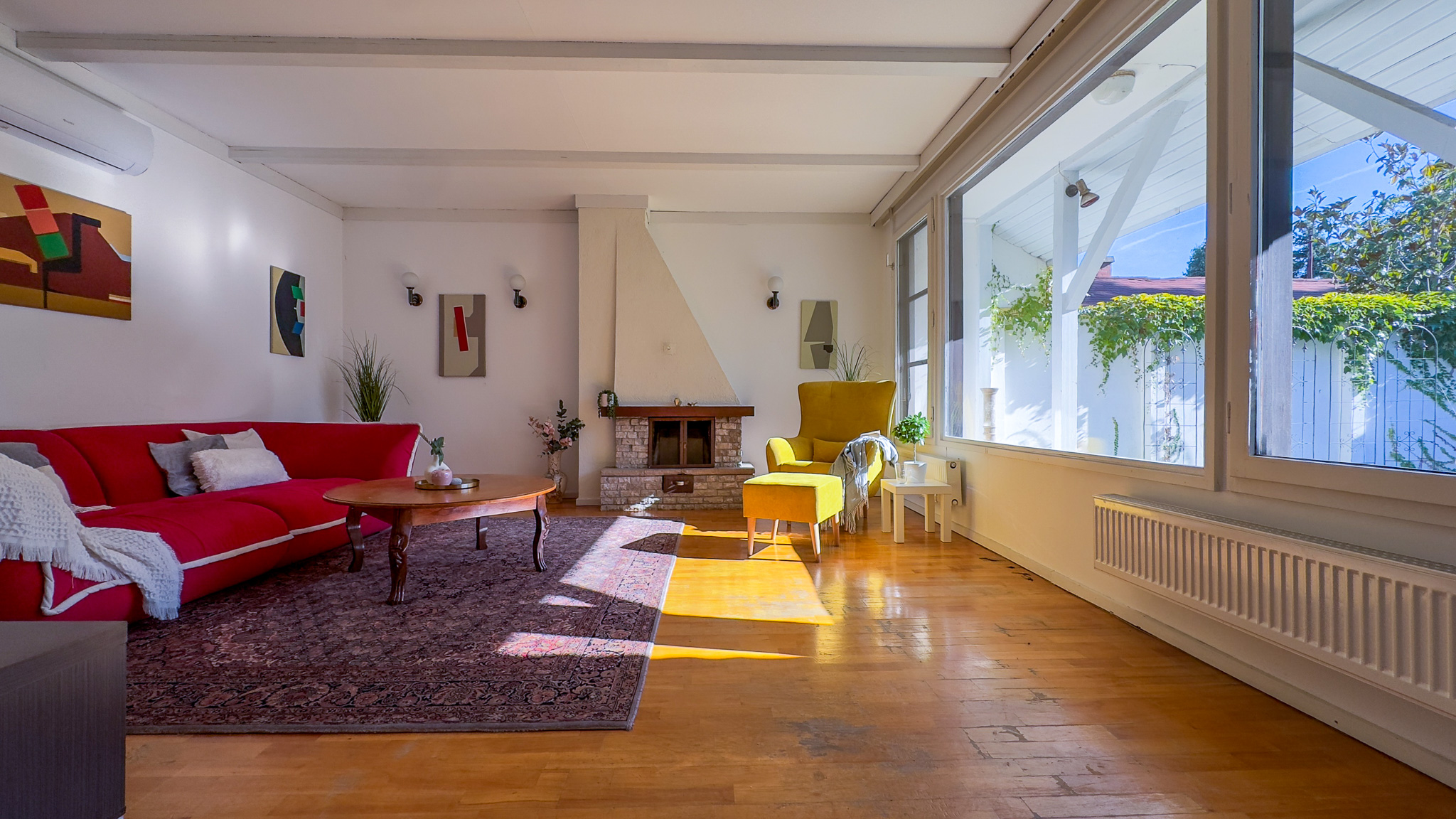
This assignment is especially close to my heart: the owners were abroad, and I ran the whole sale from here. After the house was cleared, we used the remaining furniture and the family’s paintings for the new, clean interior, and that is how the photos were taken.
“Selling the house was a long and far from simple process, and on top of that we were living abroad, so it meant a lot that we could count on her all the way. She stood by us right until the sale, looked after the house, furnished it beautifully and prepared it for the photos and viewings.” – Ádám Szűcs, Google review (translated from Hungarian)
More references and reviews (in Hungarian)
39 minutes by HÉV to Batthyány tér. By car on road 11 it is much longer in the morning rush hour, and if there is an accident there is no real detour.
The full reconstruction of the line is expected to start in 2027, with about 18 months of closure and replacement buses. The exact period is being negotiated from autumn 2026.
The old town has been protected by a mobile flood wall since 2013. Papsziget and parts of the riverside, however, are in the Danube’s flood bed; the water comes regularly, and banks only lend against additional collateral there.
Many people do, and you can register your address there. But the holiday zoning affects what you can build, rezoning and the mortgage: banks typically lend up to half the value. Ask for a zoning certificate for the plot number before you buy.
Typically in the inner parts of the hillside: Petyina, Tyúkosdűlő, Boldogtanya, Upper Pismány. Where the road and the sewer are still missing and the zone is holiday land.
EU citizens can buy on the same terms as Hungarians. Non-EU citizens usually need a permit from the county government office; I clarify this with my lawyer before you commit. More on buying in Hungary as a foreigner.
Tell me where you are and what the property is, and I will tell you what the next step would be: how the zoning, the sewer or the HÉV closure affects your price and your buyers. The first consultation is free, in person or online.